Tinajani Reframes Peru’s Altiplano as a High-Design Conservation Retreat
A six-tent canyon camp between Cusco and Lake Titicaca brings hot tubs, heritage design, and conservation-led travel to Peru’s high plateau.
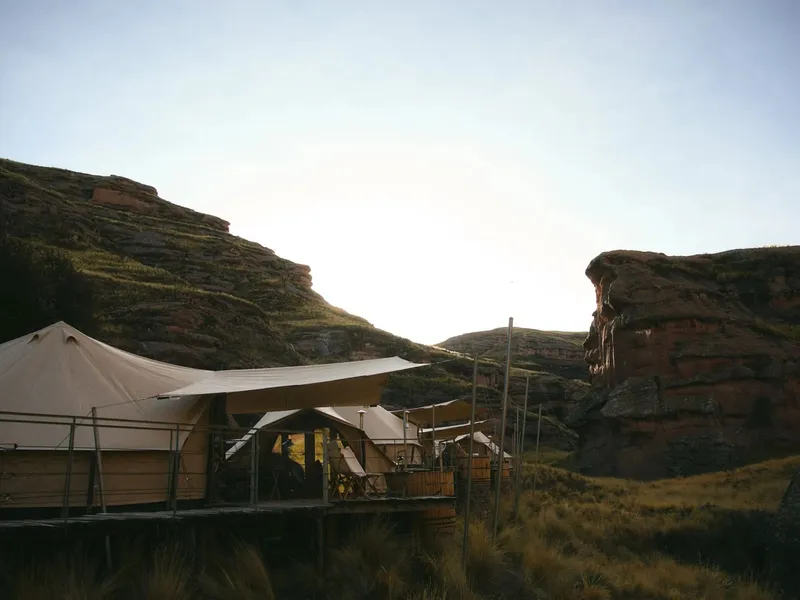
At nearly 13,000 feet above sea level, Tinajani introduces a different kind of Peruvian escape: a six-tent retreat set among the red sandstone formations of the Altiplano. Created by homegrown hospitality brand Andean on a former sheep and alpaca farm, it trades the usual resort grammar for canyon silence, private hot tubs, and access to sacred terrain marked by petroglyphs and burial caves.
The property sits in the Cañón de Tinajani between Cusco and Lake Titicaca, in a landscape shaped by wind, water, and ancient seabeds. Conceived by siblings Ignacio and Sandra Masías, the project preserves the spirit of the original 19th-century farmstead while placing conservation and cultural exchange at the centre of the guest experience.
At the centre is the restored Casona, the original family home, kept intact with adobe walls and a thatched roof. Nearby, a 1947 annex now houses the dining room and operational spaces, while the open-air Galpón serves as a relaxed communal hub. The architecture feels measured and local, with old structures carrying the memory of the site rather than being polished into something generic.
A short walk away, six campamentos are scattered discreetly across the canyon floor. Built on wooden stilts to reduce environmental impact, each tented suite includes a bedroom, separate lounge, and a private deck with an open-air hot tub. Interiors layer Peruvian cotton bedding, alpaca throws, lambswool rugs, handmade furniture from local makers, and restored family pieces that give the rooms warmth without overstatement.
Dining follows the same place-first logic. In the open kitchen, meals draw on Altiplano traditions and ancestral cooking methods, with local ingredients prepared slowly over fire. Dishes such as chairo, pastel de quinoa, wood-fired cancacho, and huatia give the menu a distinctly regional identity, while breakfast introduces Andean cereal crepes, oatmeal, chapla bread, and herbal teas including muña and cedrón.
Evenings feel especially well judged. Guests gather for fondue made with Andean cheeses and local cuts of meat, often followed by api, the warming purple corn drink that suits the crisp highland air. Rather than formal destination dining, Tinajani offers something rarer: food that reads as part of the landscape, tied to weather, altitude, and daily rhythm.
Experiences here are shaped less by amenities than by the terrain itself. Guests can trace ancestral migration routes on foot or horseback, join sunrise meditation ceremonies, and visit pre-Incan petroglyphs hidden among the cliffs. Excursions to the Puyas de Raimondi forest reveal one of the region’s most arresting natural spectacles, while visits to Ayaviri and Pucará bring encounters with craftspeople whose skills continue across generations.
Wellness is woven into that sense of immersion. Native guides lead walks that combine local stories, scientific knowledge, and cultural traditions, while the camp’s altitude and exceptionally clear skies create ideal conditions for stargazing. The hot tubs on each private deck become part of that ritual, offering a quiet way to absorb the silence, cold air, and vast scale of the canyon after sundown.
Tinajani also marks a significant step for Andean as its first private conservation area, stewarded through partnerships with Peru’s Ministries of Culture and Agriculture and expected to gain further protected status. For travellers moving between Cusco and Lake Titicaca, it opens a compelling detour into one of southern Peru’s least visited regions, where hospitality, ecology, and living tradition are treated as part of the same conversation.
For further information, visit tinajani.pe


