Donkervoort P24 RS: A Featherweight With Ford GT Firepower
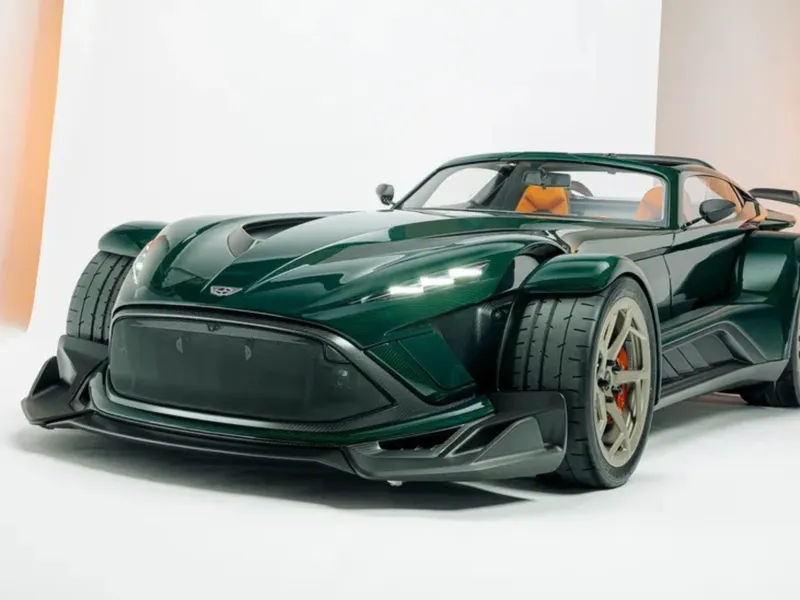
Donkervoort’s new P24 RS is built for drivers who prefer feel over filters. It’s a front-engine, rear-drive, manual-only sports car shaped by weight discipline and mechanical honesty. The brief is simple: extreme performance, minimal mass, and the kind of feedback that makes modern software-heavy machinery feel distant.
Founded in 1978, Donkervoort has long specialized in tiny, frighteningly quick machines. The P24 RS marks a generational handover, the first full project under CEO Denis Donkervoort. It also marks a powertrain pivot: the brand moves from Audi’s five-cylinder to a Ford-derived twin-turbo V6, reflecting customer demand for more cylinders while keeping the marque’s lightweight ethos intact.


Under its long bonnet sits a heavily reworked EcoBoost V6 partnered with bespoke Van der Lee turbochargers. Output is adjustable—choose calmer or full attack—with a headline 600 hp when you want to light the wick. A five-speed manual sends power through a Torsen limited-slip differential, preserving the brand’s tactile, heel-and-toe character.
We want two things: no turbo lag, and a very precise throttle response. — Denis Donkervoort, CEO, Donkervoort
At a dry weight of roughly 780 kg, responses are instant and the car gleefully pivots around your hips. Tractive adjustable dampers, tuneable traction control, and optional power steering and ABS let owners tailor the experience from track-hard to road-friendly without muting the feedback.


The bodywork is almost entirely carbon, much of it produced using Ex-Core’s foam-expanded molding process, which enables complex, stiff parts without autoclaves. Donkervoort leans into additive manufacturing too; the exhaust hardware and other elements are 3D-printed. Removable aero elements extend the nose and add serious rear devices when needed, then unbolt for the road. Even the lighting is clever: slim DRLs sit in the hood, while brighter beams pop out from the nose at a button press.


Inside, the P24 RS stays functional. There’s no stereo and no clutter—just physical switches, crisp digital instrumentation, and an integrated GPS lap timer. Lightweight Recaros, an electric handbrake that frees storage space, and a targa roof that maintains generous headroom make long days feasible. Materials highlight purpose: exposed carbon surfaces, clean trims, and hardware that feels engineered rather than ornamental.
Just 150 cars will be built, with prices from €298,500 before taxes and options. US allocation is confirmed. Consider it a rare ticket to pure driving, distilled and turned up to 2.3 g when the road—or track—allows.
For further information, visit donkervoort.com
Curators Community
Through our international Curators Community, we connect our Insiders and Members with top-tier specialists to meet all of their automobile needs.


